
Why Teenagers Change So Much: A Guide for Better Parenting
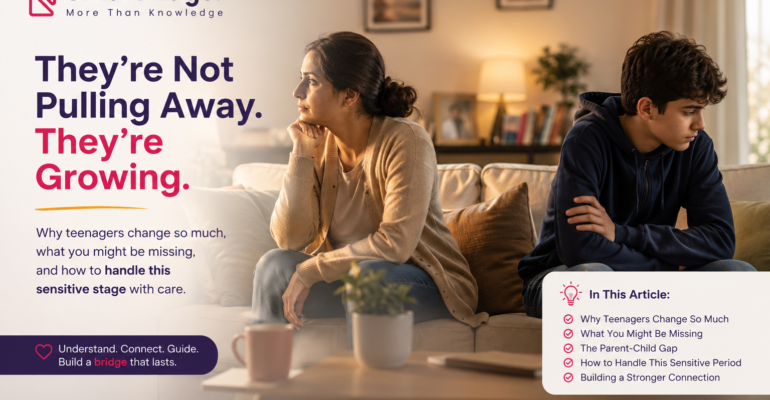
Why Teenagers Change So Much: A Guide for Better Parenting
 Faisal Shamim
 Why teenagers change so much is one of the most common questions parents ask once their child hits secondary school. The child who used to tell you everything can suddenly go quiet, moody, or hard to reach — and it can feel like they’ve changed overnight. They have, but not in the way it feels.

Why Teenagers Change So Much
The teenage years bring one of the biggest periods of brain development after infancy. The parts of the brain responsible for planning, weighing consequences and regulating emotion are still under construction, while the emotional centres are already running at full speed. That mismatch is what produces the mood swings, the impulsiveness and the sudden strong reactions to things that used to feel small. It isn’t a character change or a discipline problem — it’s biology doing exactly what it’s supposed to do at this age.
What You Might Be Missing
Because the changes show up as behaviour — slammed doors, one-word answers, a sudden obsession with friends over family — it’s easy to read them as rejection or rebellion. Underneath, most teenagers still want their parents close; they just want to feel in control of when and how. What often gets missed is that withdrawal is rarely about the parent at all. It’s more often about a teenager working out who they are outside the family, which requires some distance to do.
The Parent-Child Gap
The gap widens fastest when communication turns into a series of high-stakes conversations — about grades, screen time, or friendships — because a teenager who feels constantly evaluated will naturally share less. Ironically, the more a parent pushes for openness in these moments, the more a teenager tends to close down. The relationship holds up best when there’s still an easy, low-pressure baseline in between the bigger conversations.
How to Handle This Sensitive Period
A few shifts make a noticeable difference. Choosing curiosity over correction in the first response to bad news keeps the door open for the next conversation. Picking your battles — letting the smaller things go so the important ones land — preserves credibility for when it really matters. And accepting that some distance is healthy, rather than treating it as a problem to fix, takes the pressure off both sides.
Building a Stronger Connection
Connection at this age is built in small, repeated moments rather than big set-piece conversations: a car journey, a shared show, a walk to get food. These low-pressure moments matter more than they seem to because they don’t ask a teenager to perform or explain themselves — they just create space to be around each other. Over time, that’s what keeps the relationship intact through a stage that can otherwise feel like a standoff.
How SmartEdge Can Help
One of the biggest sources of tension in this stage is schoolwork. Nagging about revision, chasing homework, and checking grades can turn a parent into the person a teenager avoids — and it’s often the relationship that takes the strain, not just the subject. This is exactly where a SmartEdge tutor helps in a way that goes beyond the grade: your child gets one-to-one accountability and structure from someone who isn’t their parent, in Maths, Science or English, backed by our 3-month grade guarantee. That takes the academic pressure off the relationship entirely, so home can go back to being home.
If schoolwork has become a flashpoint at home, message us on WhatsApp to book a free trial session and take that pressure off both of you.